Rent-Friendly Weatherization That Won’t Leave a Mess Behind
If you rent, energy-saving upgrades can feel out of reach. You may notice cold drafts, hot rooms, or higher utility bills, but still hesitate to make changes that could damage the unit, violate a lease, or require landlord approval.
The good news is that some of the most useful weatherization steps are temporary, inexpensive, and easy to undo when you move. That makes them a strong fit for renters who want more comfort and lower energy use without turning a rental into a renovation project.
This guide focuses on reversible fixes you can usually handle yourself. These are not solutions, and results vary by building condition, climate, and how you heat or cool the space. But practical guidance for renters consistently points to the same idea: several small fixes often work better than waiting for one big upgrade.
As a category, these kinds of sustainable home upgrades can also support home energy resilience. A less drafty room stays comfortable longer during a power outage or HVAC interruption, which matters whether you own or rent.
Sealing Gaps and Leaks Without Permanently Altering Property
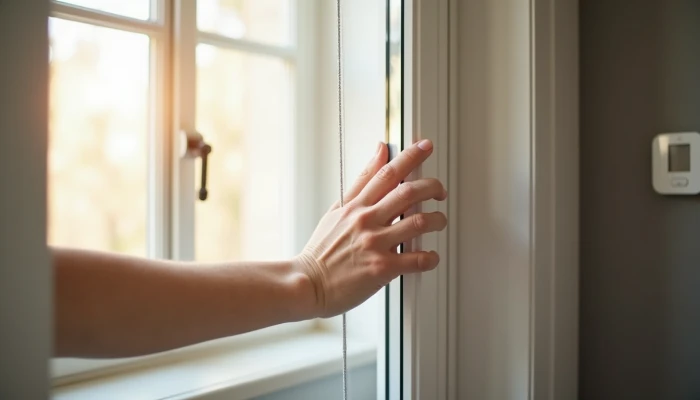
Air leaks are often the simplest place to start because they are easy to notice and usually cheap to address. Drafts around doors, windows, and utility penetrations can make a room feel uncomfortable even when the thermostat says the temperature is fine.
For renters, the goal is to seal leaks without creating damage that is hard to reverse later. Removable weatherstripping is often the first tool to try on doors and operable windows. Door sweeps can also help at entry doors where you feel air moving near the threshold.
A practical way to spot problem areas is to check these locations:
- Around the edges of exterior doors
- Where window sashes meet the frame
- At baseboards near exterior walls
- Around window-mounted AC units
- Where pipes or cables pass through walls in utility areas
If you find small gaps, use products designed to be removable or low-residue. Adhesive-backed weatherstripping and fabric draft stoppers are usually safer rental choices than permanent caulk. Be careful with expanding foam sealant. While some guides mention it for larger gaps, many versions are difficult to remove cleanly and may not be appropriate without permission. In most rentals, a temporary gap filler, removable rope caulk, or a fitted draft blocker is the lower-risk option.
If your rental includes access to an unfinished basement, attic hatch, or similar area that affects your unit, lightweight temporary insulation panels may help in specific spots. The key is to avoid fastening them in a way that leaves holes or residue.
A simple priority order can help:
- Seal the front door or main exterior door first.
- Fix the draftiest window in the room you use most.
- Add draft stoppers at thresholds and obvious floor-level leaks.
- Recheck comfort before buying more materials.
This approach keeps costs low and helps you focus on the leaks you can actually feel.
Insulation Upgrades with Reversible Options
Renters usually cannot open walls or add permanent insulation, but that does not mean insulation upgrades are off the table. Temporary layers can still reduce heat loss in winter and unwanted heat gain in warmer months.
Window insulation film is one of the most common reversible options. It creates an extra barrier over the window and can be especially helpful with older or single-pane windows. It is seasonal, fairly low-cost, and usually removable if installed carefully according to product directions.
Heavy curtains or thermal curtains are another practical fix. They are most useful when windows feel cold to the touch or when strong sun overheats a room. During cold weather, close them at night to reduce heat loss. During sunny hot periods, close them during peak sun hours to reduce heat gain.
You can also use removable foam panels in limited situations, such as behind a bed or sofa placed against a cold exterior wall. This will not solve a building-wide insulation problem, but it can make a frequently used area feel less chilly.
Here is a quick comparison of common reversible options:
| Fix | Where it helps most | Main benefit | Main tradeoff |
|---|---|---|---|
| Window insulation film | Drafty or single-pane windows | Adds a seasonal thermal barrier | Changes window access and appearance |
| Heavy curtains | Bedrooms, living rooms, sun-exposed windows | Helps with comfort and light control | Works best when kept closed at key times |
| Foam panels behind furniture | Cold exterior walls in specific rooms | Targets one uncomfortable area | Limited effect for whole-home energy use |
Implementation guidance for renters often highlights insulation film and heavy curtains because they are temporary and widely available. They also fit the reality of rental living: low-cost fixes, reversible changes, and no landlord approval required in many cases.
Before buying materials for every room, test one window or one room first. If comfort improves, expand from there. That small trial can keep you from overspending on a fix that does not match your building.
Smart Thermostat Integration for Energy Management
Not every rental allows thermostat replacement, and not every heating system is compatible with smart controls. But if your unit already has a compatible thermostat, or your landlord allows a simple swap that can be reversed later, scheduling can help reduce wasted heating and cooling.
The main value is not the gadget itself. It is the routine. A thermostat schedule can reduce unnecessary runtime when you are asleep, at work, or away for the weekend. Remote control can also help if your plans change and you want to avoid heating or cooling an empty apartment longer than needed.
Before making any thermostat change, check three things:
- Whether your lease says anything about electrical or HVAC modifications
- Whether your current system is compatible with the thermostat you want to use
- Whether you can reinstall the original thermostat before moving out
If replacing the thermostat is not realistic, you can still apply the same energy-management idea manually. Set a consistent schedule for turning temperatures down or up based on occupancy. Pair that with your weatherization work so the unit holds temperature better between HVAC cycles.
A simple renter-friendly routine looks like this:
- Pick one comfortable home temperature.
- Pick one away temperature for work or errands.
- Use the same schedule for a week.
- Adjust only if comfort drops too much.
This matters because weatherization and temperature control work together. Sealing leaks and improving window performance can make thermostat setbacks more practical by slowing down how quickly a room loses heat or gains it.
If your building uses central heat you do not control, this section may matter less. In that case, focus more on drafts, windows, and room-level comfort tools like curtains.
Reversible Weatherization Solutions for High-Impact Areas
Some parts of a rental have an outsized effect on comfort. Instead of trying to improve everything at once, focus on the areas where heat loss or heat gain is most obvious.
Windows are usually near the top of the list. If glass feels cold in winter or rooms overheat from direct sun, temporary window film can help reduce heat transfer. Pairing film with curtains often works better than using either one alone.
Doors and thresholds are another high-impact area. A removable draft stopper can reduce airflow at the bottom of the door, while weatherstripping can help around the frame. These are especially useful if the entryway opens directly outdoors or into an unconditioned hallway.
If your rental has accessible ductwork in an unfinished basement, utility room, or similar space, removable insulation wraps or covers may help reduce losses from exposed ducts. This is more relevant in duplexes, rented houses, or lower-level units than in a typical apartment. As always, avoid anything that blocks access panels, creates a safety issue, or violates lease terms.
Use this quick checklist to decide where to start:
- Start with windows if you feel temperature swings near glass or see condensation in colder weather.
- Start with doors if you feel moving air at the threshold or around the frame.
- Start with floor-level draft fixes if your feet feel cold even when the room air seems warm.
- Start with accessible ducts only if they are clearly part of your rented space and easy to reach safely.
One more resilience note: weatherization is not backup power, and it will not replace a portable power station during an outage. But it can help a space stay comfortable longer if heating or cooling is interrupted. In that sense, these small fixes support the same practical goal as other home energy resilience steps: making your space easier to live in when conditions are less than ideal.
The biggest mistake is spreading your budget across too many small items before identifying the worst problem spots. Target the obvious weak points first, then add more only if needed.
Conclusion
Renters do not need to wait for a major renovation to make a home feel less drafty and less wasteful. Temporary weatherization can be practical, affordable, and easy to reverse when your lease ends.
The most useful approach is usually simple: seal obvious leaks, improve the worst windows, and match those fixes with better temperature management. No single step is guaranteed to solve every comfort or cost problem, but several low-cost fixes together can make a noticeable difference.
If you want to keep it manageable, start with one room and one draft source this week. That small test is often the easiest way to find which sustainable home upgrades are actually worth doing in your rental.