The Renter’s Guide to Energy Savings: Practical Steps for Lower Bills and Greater Comfort
Renters often have the same energy problems as homeowners—drafty rooms, high utility bills, uneven temperatures, and older appliances—but less control over the building itself. That can make efficiency feel out of reach.
The good news is that meaningful progress does not always require major renovations. Many sustainable home upgrades for renters are really small decisions: adjusting thermostat settings, sealing obvious drafts, changing lighting, using appliances more efficiently, and asking the landlord for improvements that benefit both sides.
This guide focuses on practical steps you can take without assuming a big budget or ownership of the property. It also covers how to think about energy efficiency ratings for renters, where rebates or assessments may apply, and how to approach larger upgrades when landlord approval is required.
No-Cost and Low-Cost Energy-Saving Actions
The easiest place to start is with changes that do not alter the property permanently. These steps can improve comfort and reduce wasted energy without turning your rental into a renovation project.
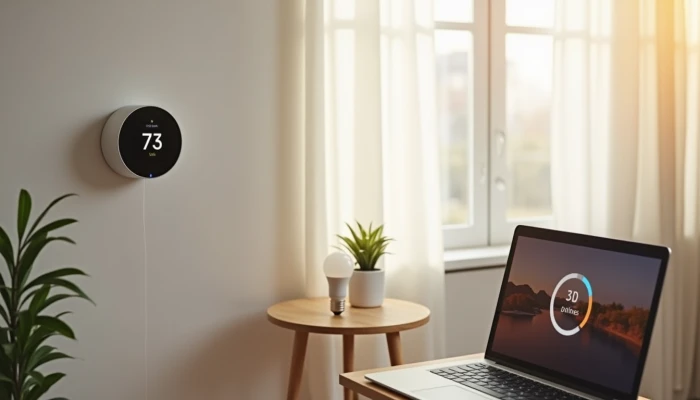
Thermostat settings matter, especially if heating and cooling make up a large share of your bill. Common energy guidance for renters points to settings around 78°F in summer when you are home and 68°F in winter, with adjustments when you are asleep or away if your lease, climate, and heating system make that practical. The goal is not to be uncomfortable. It is to avoid conditioning the space more than necessary.
Air leaks are another common problem in rentals. If you feel drafts around windows, doors, or through gaps at the bottom of an exterior door, temporary weatherization can help. Removable weatherstripping, door sweeps, and draft stoppers are usually low-cost and renter-friendly. Even simple fixes like closing curtains at night in winter or during hot afternoon sun can support home energy efficiency.
Lighting is one of the simplest upgrades to check. If your rental still uses incandescent or halogen bulbs in lamps you control, replacing them with LEDs can reduce electricity use and lower replacement frequency. Just save the original bulbs if you need to restore the unit when you move out.
Standby power is worth addressing too. Chargers, game consoles, TVs, printers, and kitchen appliances can keep drawing power even when not actively in use. A smart power strip can make this easier by cutting power to grouped devices when the main device turns off.
Use this quick renter checklist to spot easy wins.
- Check thermostat settings for day, night, and away times.
- Feel for drafts around windows, doors, and baseboards.
- Replace bulbs you control with LEDs.
- Use curtains or blinds to manage heat gain and heat loss.
- Plug entertainment or desk equipment into a smart power strip.
- Clean or replace accessible HVAC filters if your lease or landlord allows it.
- Report obvious maintenance issues such as loose window latches or damaged weatherstripping.
If you are shopping for portable items, it can also help to look at energy efficiency ratings for renters. For example, when choosing a window AC unit, dehumidifier, or replacement light bulb that you personally own, compare labels such as ENERGY STAR certification, wattage, and estimated annual energy use. That will not solve every building problem, but it can help you avoid adding unnecessary energy load inside the unit.
Energy Efficiency Programs and Rebates Available to Renters
Many renters assume rebates and tax credits are only for homeowners. In practice, some programs do include renters, though the rules vary by upgrade, state, utility, and whether landlord approval is needed.
Federal tax credit guidance indicates that renters may be able to claim certain credits when they personally pay for eligible improvements to a residence they use, including some high-efficiency equipment and home energy audits. That does not mean every rental upgrade qualifies, and it does not mean a landlord-installed improvement automatically becomes a renter tax benefit. It means renters should not rule out incentives without checking the details.
State and local programs can be even more relevant. Some are designed around household income, utility territory, or building type rather than ownership status. Examples of programs for renters include low-income utility assistance programs, state home energy rebate programs that allow renter participation, and no-cost or reduced-cost home energy assessments offered through utilities or partner organizations. In some places, renters can qualify based on their own household income if the unit is their primary residence.
A useful way to sort your options is to separate them into three categories.
| Program type | What renters should look for | Common catch |
|---|---|---|
| Federal tax credits | Whether renter-paid improvements to a primary residence are eligible | You usually need qualifying equipment, documentation, and tax liability |
| State or utility rebates | Income-qualified discounts, appliance rebates, weatherization help, or home energy assessments | Some programs require landlord consent |
| Local assistance programs | Community action agencies, weatherization support, or bill assistance | Availability depends on location and funding |
If you want a simple process, start here.
- Check your electric and gas utility websites for renter programs, assessments, and appliance rebates.
- Review your state energy office or state efficiency program for renter eligibility.
- Look for income-qualified programs if your household may meet the threshold.
- Ask whether landlord approval is required before you buy or install anything.
- Keep receipts, model information, and written approval if a program requires documentation.
Programs tied to organizations such as Efficiency Vermont are a good example of how this can work in practice. Efficiency-focused utility or state partners often publish renter-specific guidance, offer assessments, and identify low-cost opportunities before recommending bigger upgrades. That makes them useful starting points even if you are not sure what your rental needs yet.
Collaborating with Landlords for Larger Efficiency Upgrades
Some of the biggest comfort and efficiency gains in a rental come from changes you cannot make alone. That might include insulation work, HVAC servicing, replacing an old thermostat, fixing leaky windows, or upgrading an aging water heater. In those cases, the practical skill is not DIY installation. It is making a clear, reasonable request.
Landlords are not obligated to approve every efficiency idea, and renters should avoid making assumptions about what is allowed. Still, many requests are more persuasive when they are framed around maintenance, tenant comfort, and property value rather than abstract sustainability goals.
A good request usually includes three things.
- The specific problem, such as one room never heating properly or noticeable drafts around a window.
- The likely maintenance or efficiency fix, such as HVAC service, weatherstripping replacement, or a programmable thermostat.
- The reason it helps both parties, such as improved comfort, reduced wear on equipment, or access to a rebate program.
If a rebate or assistance program is available, mention that clearly. Some programs specifically note that renters need landlord approval, while others allow tenant participation if the owner signs off. That can make a landlord more open to the conversation because the full cost may not fall on them.
Here is a simple message structure you can adapt.
- Describe the issue briefly and factually.
- Note any comfort or maintenance impact.
- Mention that you found a utility or state program that may support the upgrade.
- Ask whether they would be open to discussing the option.
- Offer to share the program details.
It can also help to prioritize requests. Start with items that are low-cost, reversible, or clearly tied to maintenance. A landlord may be more willing to approve weatherstripping, filter replacement, or thermostat updates than a larger insulation project. If you are asking for a bigger change, be ready for a slower process and possible limits based on building type, budget, or lease terms.
Behavioral Changes for Ongoing Energy Reduction
Even in a rental with older equipment, daily habits can reduce waste. These changes are not dramatic, but they are often the most realistic because they do not depend on ownership, installation, or a rebate application.
Start with heating, cooling, and light. Use daylight when possible instead of turning on overhead lighting early. In hot weather, close blinds or curtains during the sunniest part of the day to reduce indoor heat gain. In cooler weather, open them when sunlight can warm the room and close them after dark to help hold heat.
Laundry and dishwashing habits also matter. Running full loads usually makes better use of water and energy than frequent partial loads. If your machine settings allow it, choose lower-temperature wash cycles when appropriate for the fabric and soil level. Air-drying some clothing can also reduce dryer use if your space and lease allow it.
Kitchen habits can help too. Avoid leaving the refrigerator door open while deciding what to eat. Match pot size to burner size when cooking. Use small appliances strategically when they use less energy than heating the full oven for a small task.
Electronics are another steady source of avoidable use. If you do not want to unplug devices constantly, create zones. Put your TV setup on one strip, your desk equipment on another, and switch them off when not needed.
Try this weekly reset routine.
- Review thermostat settings before the workweek starts.
- Check that blinds and curtains are being used for the season.
- Run laundry and dishes as full loads when possible.
- Turn off unused power strips before bed or when leaving.
- Notice any comfort problems that may point to a maintenance issue worth reporting.
These habits will not produce identical results in every home. But they can help renters reduce home energy use steadily over time, especially when combined with small physical improvements and access to local programs.
Conclusion
Renters do not need to wait for homeownership to make progress on energy savings. The most practical path is usually a mix of low-cost fixes, better daily habits, and selective conversations with the landlord about upgrades that improve comfort and reduce waste.
If you want to keep this manageable, start small. Seal the obvious drafts, review thermostat settings, switch the bulbs you control, and cut standby power where you can. Then look for local utility or state programs that specifically mention renters, assessments, or income-qualified support.
The biggest takeaway is that home energy resilience and efficiency are not all-or-nothing. In a rental, progress often comes from stacking realistic actions rather than chasing a perfect solution.