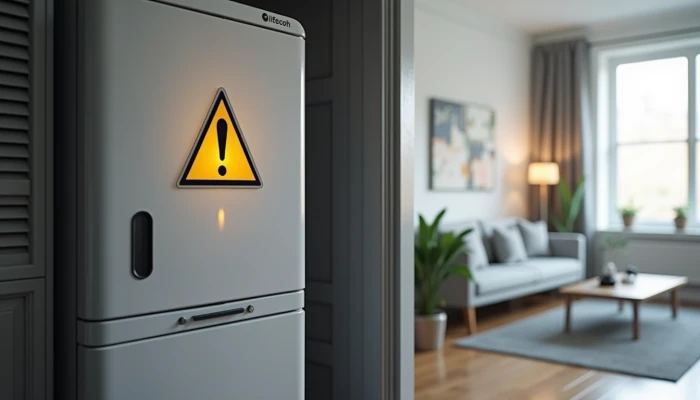
Where Apartment Battery Setups Cross the Line for Renters
A small battery for outages can sound simple. In an apartment, it often is not.
Renters looking into home battery backup usually run into a different set of constraints than homeowners. The issue is not just whether a unit can keep a fridge, router, or lights running. It is whether the setup fits building rules, fire code expectations, and the realities of shared walls, hallways, and neighboring units.
That matters because an apartment battery setup can create problems fast if it blocks access, overheats in a tight space, or turns into an unapproved fixed installation. In some buildings, the result is more than a safety risk. It can also mean lease violations, forced removal, or liability after an incident.
This guide stays focused on the most common compliance mistakes renters make and how to avoid them. It is not a substitute for your local authority having jurisdiction, building management, or a qualified installer. But it can help you ask better questions before you bring a battery system into a rental unit.
Understanding Code Compliance Standards
The first mistake many renters make is assuming any battery that works indoors is automatically allowed indoors. That is not how compliance usually works.
In multi-unit buildings, battery storage can fall under fire and building code rules that are stricter than what people expect from a consumer appliance. Requirements may depend on battery chemistry, capacity, whether the system is portable or fixed, and whether any wiring changes are involved.
A common line renters cross is turning a portable backup option into a de facto installed system. Once a setup involves fixed wiring, wall mounting, or penetrations through walls, ceilings, or exterior surfaces, permits and review by the local authority having jurisdiction may be required.
Implementation guidance and code references commonly emphasize a few baseline questions:
- Is the unit truly portable, or is it being treated like a permanent energy storage system?
- Does the setup involve fixed electrical connections?
- Is it located in a place that affects egress, fire separation, or emergency access?
- Does the building have lease rules or house rules that are stricter than general code?
For renters, the practical takeaway is simple: a battery backup without solar is often easier to keep compliant when it remains a portable, manufacturer-intended indoor unit rather than a modified installation.
Use this quick screening table before you buy or place anything.
| Setup choice | Lower-risk direction | Higher-risk direction |
|---|---|---|
| Battery type | Portable unit designed for indoor backup | Fixed or semi-fixed storage system |
| Electrical connection | Plug-in use within manufacturer instructions | Hardwiring or improvised transfer arrangements |
| Placement | Open area with clearance | Closet, cabinet, or hidden corner |
| Building changes | No penetrations or mounting | Drilling, anchoring, or exterior routing |
| Approval path | Landlord or manager informed first | Installed first, questions later |
Another mistake is treating general online advice as universal. Local codes, lease terms, and building-specific fire safety rules can differ. Compliance is not something a product listing can guarantee for your apartment.
Shared Wall Risks and Heat Management
The second major mistake is thinking battery placement only affects the person using it.
In an apartment, battery heat, smoke, and fire exposure do not stay neatly inside one room. Shared walls, stacked units, common corridors, and limited escape paths make placement more sensitive than it would be in a detached house.
That is why fire safety guidance often pays close attention to where batteries sit relative to egress routes, neighboring units, and enclosed spaces. A battery placed against a shared wall, near an exit path, or in a poorly ventilated storage area can raise concerns even if the unit itself is listed for indoor use.
Renters also underestimate heat management. A battery does not need to be visibly hot to have a placement problem. Tight corners, soft furnishings, direct sun, blocked vents, and enclosed shelving can all interfere with normal temperature control.
Watch for these placement mistakes:
- Pushing the unit flush against a shared wall with no clearance
- Storing it in a coat closet, utility closet, or under-bed compartment
- Placing it near curtains, paper storage, bedding, or upholstered furniture
- Setting it in a hallway, by the apartment entry, or anywhere that narrows escape routes
- Charging it in an enclosed area where heat can build up
A useful rule of thumb is that apartment batteries should be easy to inspect, easy to unplug if needed, and easy for first responders to access without moving other items.
If you are comparing locations in your unit, use this simple decision checklist.
- Choose a stable, non-combustible surface.
- Keep the area open, visible, and dry.
- Leave the manufacturer-recommended clearance around vents and sides.
- Avoid shared egress paths and door swing areas.
- Avoid locations that back up directly to cluttered storage or soft materials.
- Recheck the spot during charging, not just during storage.
This is where shared wall risks become practical, not theoretical. In a rental building, your safest-looking corner may still be the wrong location if it increases heat buildup or complicates evacuation.
Safety Baseline Requirements
The third mistake is skipping the basic safety baseline because the system feels consumer-friendly.
Even a portable power station should meet minimum safety expectations. For renters, that starts with using equipment that includes battery management and protection features appropriate for indoor operation. Guidance around battery energy storage commonly points to continuous monitoring of voltage, current, and temperature as a core safety function.
That does not mean every renter needs a large installed system. It does mean you should not treat a battery like a generic extension cord accessory.
At minimum, your setup should meet these baseline habits:
- Use a listed unit intended for the way you plan to use it indoors.
- Follow charging temperature and storage temperature instructions.
- Keep the battery on a hard, stable surface.
- Keep vents unobstructed.
- Do not cover the unit while charging or discharging.
- Do not daisy-chain questionable accessories, adapters, or overloaded power strips.
- Keep fire department access routes clear.
Another common mistake is focusing only on runtime. A renter may ask whether a unit can run a fridge during an outage, but not whether the charging method, location, and cable routing create a hazard. A backup power for outages plan is only useful if it remains safe during normal use.
Portable systems can make sense in apartments because they avoid some of the compliance issues tied to permanent installation. But portable does not mean risk-free.
Here is a practical mistake-to-avoid table.
| Mistake | Why it matters | Better move |
|---|---|---|
| Charging on carpet | Can trap heat and reduce stability | Charge on a hard surface |
| Blocking vents with bags or laundry | Restricts cooling | Keep the unit clear on all sides |
| Running cords across exits | Creates trip and egress hazards | Route cords away from doors and walk paths |
| Hiding the battery in a closet | Limits ventilation and visibility | Keep it in an open, monitored area |
| Using damaged cables | Raises electrical risk | Replace with approved cables |
If a unit shows swelling, unusual heat, damage, or repeated fault warnings, stop using it and follow the manufacturer’s safety instructions. That is not the moment to improvise.
Installation Best Practices for Renters
The fourth mistake is approaching apartment backup power like a homeowner project.
Renters usually need a lighter-touch approach. In many cases, the most workable option is a portable power station or similar portable backup unit that does not require permanent modification. That can be a better fit for apartments than trying to create a fixed solar generator or battery room concept inside a rental.
The goal is not to maximize system size at all costs. The goal is to stay within a safe, compliant use case.
A practical sequence looks like this.
- Check your lease and building rules first.
- Ask management whether portable indoor battery units are allowed and whether there are placement restrictions.
- Confirm whether your plan involves any fixed wiring, mounting, or penetrations.
- Choose a listed indoor unit sized for realistic essential loads, not whole-apartment expectations.
- Pick an open location away from exits, clutter, and flammables.
- Test the setup during normal conditions before an outage happens.
There are also a few things renters should avoid even if they seem convenient.
- Do not mount batteries on walls.
- Do not install them in closets with limited ventilation.
- Do not route cables through doors in ways that damage insulation or create pinch points.
- Do not assume a balcony setup is automatically allowed.
- Do not add solar panels or exterior equipment without explicit approval.
If you want backup power without solar, keep the plan simple. Many renters only need enough capacity for a phone, internet gear, lights, medical support devices if applicable, or limited food protection. That is a different goal from whole-home backup.
Before you buy, ask these three questions:
- What are my actual essential loads during an outage?
- Can I use this unit exactly as intended without altering the apartment?
- Has the property manager confirmed that my planned placement is acceptable?
That last step matters more than many people think. Building-specific rules can be stricter than broad online advice, especially in older buildings, high-rises, or properties with tighter fire safety policies.
For renters, the best practice is often restraint: choose the simplest setup that covers your essential needs and creates the fewest compliance problems.
Conclusion
Apartment battery backup can be useful, but renters have less room for error than homeowners. The biggest mistakes usually come from treating a battery like a harmless gadget instead of a piece of energy equipment that affects code compliance, shared wall safety, and emergency access.
If you remember only a few things, make them these:
- Keep the setup portable unless you have explicit approval for more.
- Respect shared wall risks and heat management.
- Follow basic safety placement rules every time you charge or use the unit.
- Check with your property manager and local authority when the setup moves beyond simple plug-in use.
That approach will not guarantee compliance in every building, but it will help you avoid the mistakes most likely to create fire risk, lease trouble, or preventable headaches during an outage.