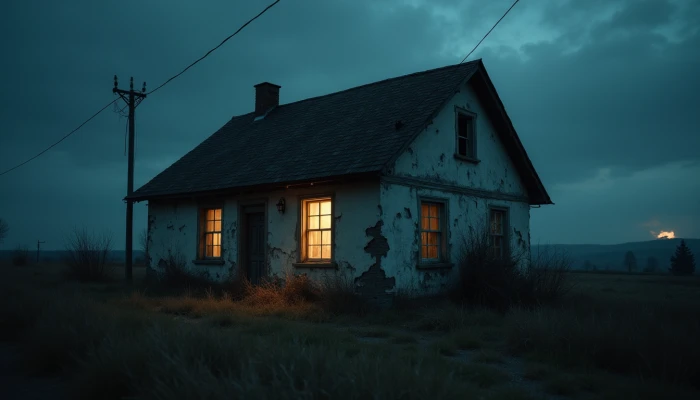
Why Home Backup Plans Fail When the House Itself Is the Weak Point
Home energy resilience is often framed as a backup power problem, but many households run into trouble much earlier. A drafty attic, an overloaded panel, or a backup plan that does not match actual household needs can make outages harder and energy bills higher.
For homeowners and renters trying to make practical upgrades, the challenge is usually not a lack of interest. It is figuring out which weak points matter most, what can be improved without a full overhaul, and where tradeoffs are unavoidable.
This guide focuses on three frequent trouble spots: insulation failures, electrical system limitations, and overreliance on non-renewable energy sources. The goal is not to promise a perfect setup. It is to help you identify what is making your home less reliable and choose next steps that fit real homes, real budgets, and real outage risks.
Common Insulation Failures and Their Impact
Insulation problems are easy to miss because the symptoms look ordinary. Rooms feel uneven, heating and cooling run longer than expected, and the house loses comfort quickly during an outage. In practice, that means your home needs more energy to stay livable and has less ability to coast through short disruptions.
One of the most common mistakes is adding insulation without dealing with air leaks first. If outside air is still moving through gaps around penetrations, hatches, recessed fixtures, or framing joints, extra insulation may not perform as expected. Implementation guidance commonly emphasizes air sealing first because uncontrolled air movement can undermine the value of the insulation already in place.
Ventilation mistakes are another frequent issue, especially in attics. Blocking soffit vents or creating moisture traps can lead to damp insulation, reduced performance, and building durability problems. That matters for resilience because a house that manages heat poorly in normal conditions will usually perform worse when the grid is stressed or the power is out.
Incorrect insulation type or quantity also shows up often. An attic may have patchy coverage, compressed batts, or too little material for the space. Walls may be harder to assess, but comfort differences, cold surfaces, and persistent drafts can point to gaps or underinsulated areas.
A simple troubleshooting sequence can help you avoid guessing.
- Check for obvious air leaks around attic hatches, plumbing penetrations, wiring penetrations, and window or door trim.
- Look for uneven or disturbed attic insulation, especially bare spots or compressed sections.
- Confirm that vents are not blocked and that the attic is not showing signs of moisture buildup.
- Note which rooms lose comfort fastest during hot or cold weather.
- Prioritize sealing and weatherization before assuming you need a larger backup system.
This matters because envelope improvements can reduce the amount of backup power needed to maintain basic comfort. A better sealed and better insulated home may keep temperatures stable longer, which can make a portable power station or smaller battery backup strategy more useful for short outages.
For renters, the practical path may be narrower, but not nonexistent. Reporting drafts, requesting weatherstripping, using temporary window sealing methods allowed by the lease, and documenting persistent comfort issues can still improve performance. For owners, attic air sealing and insulation correction are often among the more direct resilience upgrades because they support both everyday efficiency and outage tolerance.
Electrical System Limitations
A backup plan can look solid on paper and still fail in practice if the home's electrical system cannot support it. Older homes may have undersized panels, limited circuit capacity, outdated wiring, or circuits arranged in ways that make selective backup difficult.
This becomes a problem when households assume they can power more than they actually can during an outage. A fridge, internet equipment, lights, medical devices, a sump pump, or small cooking loads may all seem manageable individually. Together, they can exceed what a circuit, transfer setup, or backup source can safely handle.
Load management is the key issue. During outages, resilience is less about powering everything and more about identifying critical loads in the right order. The most useful question is not "How big a system should I buy?" It is "What must stay on, for how long, and how is it currently wired?"
Use this quick planning table to spot likely constraints.
| Household need | Common electrical limitation | Why it matters during outages |
|---|---|---|
| Fridge or freezer | Shared circuit with other kitchen loads | Startup demand can compete with other appliances |
| Sump pump | Limited dedicated outlet or circuit access | Water protection may be harder to prioritize safely |
| Space heating or cooling | Equipment may need high-power circuits | Many backup options cannot run whole-home HVAC |
| Internet and lighting | Scattered low-priority circuits | Small loads are easy to support if grouped and planned |
| Cooking | Electric ranges draw large loads | Simple alternatives may be more realistic for short outages |
If you are evaluating backup power for outages, start with an electrical reality check.
- Identify your essential loads.
- Find which breakers serve them.
- Note whether those loads are fixed-wired or plug-in.
- Check whether any critical equipment has a dedicated circuit.
- Ask a qualified electrician whether your panel and wiring can support your intended backup approach.
This is especially important for households considering battery backup for home use without solar. In some homes, the limiting factor is not the battery itself but the panel layout, transfer equipment, or inability to isolate critical loads cleanly. In others, a simpler plug-in approach for selected devices may be more practical than trying to back up large fixed appliances.
Grid resilience research also points to a broader issue: aging infrastructure and peak demand stress can make reliability less predictable. That does not mean every home needs a major electrical overhaul. It does mean that understanding your panel, circuits, and real load priorities is part of home energy resilience, not a separate project.
For renters, this section is often about constraints rather than upgrades. You may not be able to change the panel, but you can still map essential plug-in loads, test extension-free device placement, and plan around a portable power station for lower-wattage essentials if building rules allow it.
Reliance on Non-Renewable Energy Sources
Many households still depend on fossil fuel-based backup systems or a grid mix they cannot control. That reliance can create practical resilience problems even when it seems familiar. Fuel has to be stored, replenished, and used safely. Equipment may need to stay outdoors. Noise, maintenance, and local restrictions can also affect whether a system is realistic for your situation.
That does not make fuel-based backup automatically wrong. It means the tradeoffs need to be understood clearly. A generator may offer longer runtime if fuel is available, while a solar generator or battery-based setup may be quieter and simpler to use for smaller indoor loads. Neither approach is universally better. The right fit depends on outage length, critical loads, storage constraints, and whether recharging is feasible.
A balanced way to compare options is to focus on operating limits rather than marketing labels.
| Backup approach | Strengths | Constraints to plan for |
|---|---|---|
| Fuel-based generator | Can support larger loads in some setups | Requires fuel, outdoor use, maintenance, and safe operation |
| Portable power station | Quiet and simple for selected plug-in essentials | Limited stored energy and recharge dependence |
| Solar generator setup | Can pair stored power with solar recharging | Solar input varies by weather, season, and setup |
| Hybrid approach | Can spread risk across multiple backup methods | More planning and coordination required |
Grid limitations also matter here. Research on household and system resilience notes that power shortages become more likely when demand peaks and capacity is constrained. For households, that means resilience should not be defined only as owning backup equipment. It also includes reducing unnecessary demand so the home is easier to support during disruptions.
That is where practical sustainable home upgrades connect back to backup planning.
- Weatherization can reduce heating and cooling strain.
- Efficient appliances can lower the size of critical loads.
- Better load prioritization can stretch limited backup energy.
- Hybrid planning can reduce dependence on a single fuel or power source.
If your current plan relies entirely on one non-renewable source, ask a few troubleshooting questions.
- How long could you operate safely if fuel deliveries or refills were delayed?
- Which essential loads truly need backup, and which can be deferred?
- Could some daily energy use be reduced so smaller backup options become more viable?
- Are there indoor-safe plug-in needs that a battery-based option could cover more simply?
- Do local rules, weather patterns, or housing type limit one option more than another?
For many households, the most resilient answer is not a total switch in one direction. It is a layered approach that combines lower energy demand, realistic critical-load planning, and a backup method that matches the home's actual constraints.
Conclusion
The weak points in a home energy resilience plan are often basic ones: air leaks, poor insulation details, limited electrical capacity, and backup expectations that do not match real household loads. Fixing those issues does not require extreme measures, but it does require a more grounded sequence.
Start with the house itself. If it loses heat or cool air too quickly, backup power has to work harder. Then look at the electrical system. If critical loads are unclear or circuits are poorly suited to backup use, even a capable power source may be frustrating or unsafe. Finally, compare backup options based on runtime, recharge or refueling needs, and the loads you actually need to support.
A practical path usually looks like this:
- Reduce avoidable energy waste.
- Assess electrical constraints.
- Prioritize essential loads.
- Choose backup power that fits those loads and your housing situation.
That approach will not make every home outage-proof. It can, however, make your setup more reliable, more efficient, and more realistic for everyday life.