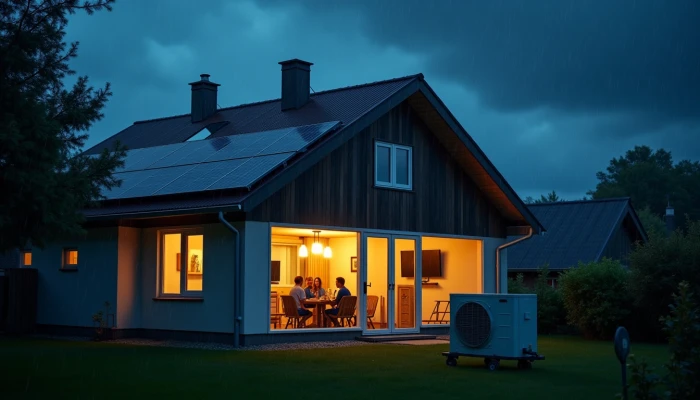
Why Home Energy Setups Fail When You Need Them Most
Home energy resilience is not just about buying backup gear or swapping one appliance for another. In many homes, the real problems are more basic: a backup setup that cannot run the loads that matter, an older electrical panel that limits upgrades, a heating system that does not match the climate, or air leaks that quietly drive up bills.
For homeowners and renters dealing with unreliable power, expensive utility bills, or aging equipment, the most useful first step is usually diagnosis. A practical plan starts with identifying where the weak points are, then choosing fixes that fit the home, the budget, and the level of disruption you can tolerate.
The sections below cover six common trouble spots, along with realistic solutions, likely tradeoffs, and a simple way to decide what to tackle first.
Inefficient Backup Power Systems
A lot of backup power disappointment comes from mismatch. People often buy a system before they know which loads actually matter during an outage. That can leave you with plenty of battery capacity for phone charging, but not enough for a fridge, sump pump, internet equipment, or a medical device.
Portable power stations can be a practical option for backup power for outages because they are quiet, can usually be used indoors, and avoid the fuel storage and exhaust issues that come with gas generators. But they also have limits. Runtime depends on battery size and the power draw of the devices you connect. Recharging can also be slow, especially during multi-day outages.
A generator may still make more sense for long outages or high-power loads. A battery-based setup may make more sense for short outages, apartment living, indoor use, or households that want simpler operation. In some homes, a hybrid approach works better than either option alone.
Use this quick comparison before buying anything:
| Need | Portable power station | Generator | Hybrid setup |
|---|---|---|---|
| Indoor use | Usually suitable | No | Battery portion yes |
| Quiet operation | Strong fit | Weak fit | Better than generator alone |
| Long runtime | Limited by battery size | Better if fuel is available | Better than battery alone |
| High surge appliances | May be limited | Often stronger | Depends on system design |
| Ease of use | Usually simpler | More setup and maintenance | Moderate |
A cost-aware way to start is to list only critical loads first.
- Refrigerator or freezer
- Internet and phone charging
- Medical devices if relevant
- A few lights
- Sump pump if flooding is a risk
Then check each device's running wattage, startup surge, and how many hours you need. That prevents overspending on the wrong size system.
The tradeoff is straightforward: portable systems are easier and cleaner to use, but they are not automatically enough for whole-home backup. A smaller battery setup can still be worthwhile if it covers your highest-priority needs reliably.
Outdated Electrical Systems in Older Homes
In older homes, the electrical system is often the hidden bottleneck behind bigger energy problems. Aging wiring, undersized service, or an outdated panel can make modern upgrades harder, less safe, or more expensive than expected.
This matters for home energy resilience because many practical improvements depend on electrical capacity. A heat pump, induction range, EV charger, battery backup system, or heat pump water heater may all add load. If the panel is already crowded or the wiring is in poor condition, the upgrade path can stall quickly.
Common warning signs include:
- Frequently tripped breakers
- Flickering lights when larger appliances start
- Limited space in the panel
- Two-prong outlets or inconsistent grounding
- Warm outlets, buzzing, or other signs that need professional attention
Available estimates for older-home electrical work often place full rewiring in the rough range of $8,000 to $15,000, with panel upgrades lower than that but still significant. Exact costs vary a lot by layout, access, local labor, and permit requirements.
The practical fix is not always full replacement right away. Sometimes the first step is simply having a licensed electrician assess service size, panel space, and the condition of branch circuits before you commit to other upgrades.
That assessment helps you avoid a common mistake: buying equipment first and discovering later that the house is not ready for it. The tradeoff is that electrical work is not glamorous and may not reduce bills on its own, but it can be the enabling upgrade that makes later efficiency and backup improvements possible.
Heating and Cooling System Inefficiencies
Heating and cooling usually drive a large share of household energy use, so system mismatch shows up fast in comfort complaints and utility bills. One common issue is assuming that the heat pump vs furnace decision has a universal answer. It does not.
Heat pumps can be very efficient because they move heat instead of creating it directly. They also provide cooling, which can simplify equipment choices in homes that need both heating and air conditioning. But performance and economics depend on climate, insulation, duct quality, electricity rates, and whether the home needs backup heat during colder weather.
A high-efficiency furnace can still be a practical choice in very cold conditions or in homes where gas service and existing ductwork already make that path simpler. On the other hand, in many moderate climates, a heat pump can be a strong fit for both comfort and energy use.
A useful decision framework is:
- Check your climate and winter temperature pattern.
- Review the condition of your existing ductwork or distribution system.
- Compare whether you need heating only, cooling only, or both.
- Ask whether your electrical system can support the upgrade.
- Look at installation cost, maintenance needs, and any available rebates.
The tradeoff is not just efficiency. It is also resilience. A system that works well in your local conditions, can be serviced locally, and fits your home's electrical capacity is usually more resilient than a theoretically better option that strains the house or budget.
If you are replacing aging equipment, avoid treating the appliance as the only variable. Air sealing, insulation, and duct performance can change how well either system performs.
Poor Insulation and Air Leaks
Some homes chase expensive equipment upgrades while losing conditioned air through gaps, cracks, and poorly insulated surfaces. That is one of the most common system inefficiencies in home energy resilience planning.
Air leaks around windows, doors, attic penetrations, and duct connections can make rooms uncomfortable and force heating and cooling equipment to run longer. Source-backed guidance commonly notes that leakage can account for a substantial share of wasted heating and cooling energy, which is why weatherization often delivers practical value before larger equipment changes.
Start with the lower-cost fixes first.
- Weatherstrip doors
- Seal obvious window and trim gaps where appropriate
- Address accessible duct leaks
- Add attic insulation if levels are clearly inadequate
- Use draft reduction measures that do not create moisture problems
For renters, the options may be more limited, but there are still practical steps such as temporary draft control, thermal curtains, and requesting maintenance for obvious gaps or failed seals.
This is also an area where rebates and weatherization programs may help, especially for households trying to improve comfort without taking on a major remodel.
The tradeoff is that insulation and air sealing can involve upfront cost, and the results are not always as visible as a new appliance. But these upgrades often support everything else in the house. A smaller backup system may go further, and heating or cooling equipment may perform more effectively, when the home shell is not leaking energy.
Energy Use Monitoring Gaps
Many households know their bill is high but do not know why. Without some form of monitoring, it is easy to blame the wrong thing and spend money in the wrong order.
Energy tracking does not have to be complicated. Utility interval data, smart meter information, plug-in monitors, and home energy audits can all help identify patterns. You may find that the biggest issue is not the appliance you expected. It could be an aging water heater, an HVAC system running too often, or standby loads spread across many devices.
A simple review can answer useful questions.
- When does usage spike?
- Is winter or summer driving the problem?
- Do certain appliances create noticeable jumps?
- Is base load high even when the home is quiet?
If you have access to utility data, compare month-to-month patterns before making major changes. If not, a home energy audit can still help prioritize likely problem areas.
Monitoring also supports resilience decisions. If you know your critical loads and your normal baseline use, it becomes much easier to size a battery backup for home use or decide whether a portable power station is enough.
The tradeoff is that monitoring does not fix anything by itself. But it reduces guesswork, which is often the cheapest improvement available.
Electrification Readiness Barriers
Electrification can improve comfort, reduce on-site combustion, and simplify some home systems, but many homes are not ready for a full transition all at once. The main barrier is often capacity: the panel, service, wiring, or load profile may not support every planned upgrade without coordination.
This is where people can get stuck. A household may want a heat pump, heat pump water heater, induction cooking, EV charging, and battery storage, but the home may need electrical planning before any of that happens smoothly.
A practical sequence often works better than a full jump.
- Review current loads and panel space.
- Identify which existing equipment is near end of life.
- Prioritize upgrades that solve immediate problems first.
- Check whether load management or staged installation can avoid larger service work.
- Review rebates and local incentives before finalizing the order.
Research on electrification readiness points to the importance of looking at the whole home rather than one appliance at a time. That is especially true for budget-conscious households, where timing matters as much as technology choice.
The tradeoff is pace. A slower, staged approach may be less exciting than a full electrification plan, but it is often more realistic. It can also reduce the risk of paying for rushed electrical work or replacing equipment before it is necessary.
Conclusion
The most useful path to better home energy resilience is usually not a dramatic overhaul. It is a sequence of targeted fixes that address the weakest links first.
For one home, that may mean sizing backup power around a fridge, sump pump, and internet connection. For another, it may mean sealing air leaks before replacing heating equipment. In an older house, the right first move may simply be an electrical assessment so later upgrades do not run into safety or capacity problems.
If you are deciding where to start, use this order:
- Identify the biggest failure point: outages, bills, comfort, or equipment age.
- Check for enabling issues such as panel limits, wiring problems, or major air leaks.
- Use audits, utility data, and rebate programs to narrow the options.
- Choose upgrades that fit your climate, budget, and outage needs.
That approach will not promise or a perfect setup. But it does make practical sustainable home upgrades more manageable, and it helps you spend on improvements that actually solve the problem in front of you.