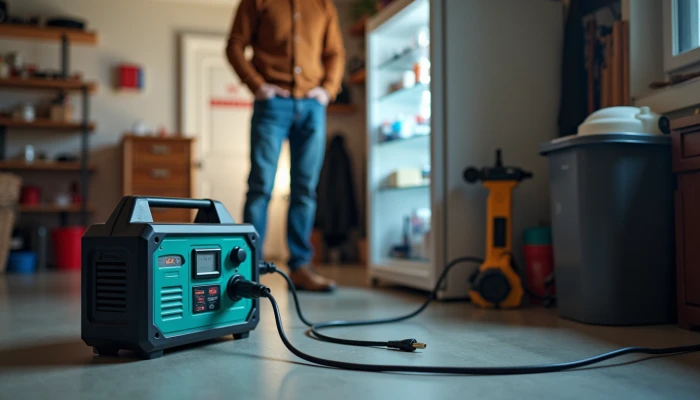
How to Avoid the Most Common Portable Power Station Safety Mistakes
A portable power station can be a useful part of home energy resilience, especially for short outages, charging essentials, or keeping a few critical devices running. But these units are still large rechargeable batteries, and they work best when temperature, charging conditions, and storage habits are taken seriously.
A lot of reliability complaints come down to preventable issues: charging when the battery is too cold, leaving the unit in a hot car or shed, storing it fully drained, or using it in damp or poorly ventilated spaces. Those mistakes can reduce performance in the moment and shorten battery life over time.
This guide focuses on the practical basics that matter most: how temperature affects battery behavior, how to charge safely, and how to store a unit so it is more likely to be ready when you need backup power for outages.
Temperature Effects on Battery Performance
Temperature has a direct effect on how a portable power station performs. In both hot and cold conditions, the battery may deliver less usable power, charge more slowly, or trigger protective shutdowns. That does not always mean the unit is failing. Often, it means the battery management system is trying to protect the cells.
Cold weather is especially important to understand. A lithium battery can show a lower state of charge, reduced output, or earlier shutdown in the cold because voltage temporarily drops. That effect may improve once the battery warms back up. But charging a lithium-based battery below freezing is a different issue. Guidance commonly warns that charging below 32°F can cause lithium plating on the anode, which can permanently reduce capacity and create safety concerns.
Heat creates a different set of problems. High temperatures can accelerate battery degradation and increase the risk of overheating. Practical guidance often treats roughly 32°F to 113°F as a common operating or charging boundary, but the exact range depends on the model. That is why the manufacturer manual matters more than any generic rule.
A simple way to think about temperature risk is this:
| Condition | What may happen | Safer response |
|---|---|---|
| Below freezing | Reduced output, inaccurate charge reading, charging damage risk | Do not charge yet; warm the unit gradually indoors |
| Cool but above freezing | Some performance loss | Use normally if within the stated range |
| Hot direct sun or enclosed vehicle | Overheating, throttling, faster battery wear | Move to shade or indoors and improve airflow |
| Very hot storage area | Long-term battery stress | Store in a more temperature-stable location |
For everyday use, a few habits help:
- Do not leave the unit in a parked car, attic, or unconditioned shed during very hot weather.
- Do not assume a battery that worked fine indoors will behave the same way outside in winter.
- If the unit was exposed to cold, let it warm gradually before charging.
- Keep the unit on a hard, stable surface with airflow around it during use.
- Check the manual for the model-specific operating, charging, and storage temperature ranges.
If you rely on a portable power station or solar generator for outage backup, temperature planning matters almost as much as wattage planning. A unit stored in the wrong place may technically be charged, but still not perform the way you expect when the power goes out.
Safe Charging Practices
Safe charging starts with the environment. Charge the unit in a dry, well-ventilated area away from flammable materials, direct sunlight, and standing water. Avoid soft surfaces that can trap heat around vents. A garage workbench, utility room shelf, or other stable indoor location is usually better than a bed, couch, or cluttered floor corner.
The biggest charging mistake in cold weather is trying to recharge immediately after bringing a cold unit inside. If the battery temperature is still below freezing, charging can damage the cells even if the room itself feels warm. Let the unit come up to temperature gradually before plugging it in.
It also helps to stay within the charging methods the manufacturer allows. Most units support wall charging, and some support car charging or solar input. With solar charging, follow the stated voltage and input limits rather than mixing panels or adapters casually. Incompatible inputs can create avoidable risk.
Use this quick charging checklist before you plug in:
- The unit is dry.
- The battery is within the manufacturer’s charging temperature range.
- Vents are unobstructed.
- Cables and plugs are undamaged.
- The charging source matches the approved method for the unit.
- The area is away from paper, fabric, fuel, and other flammable items.
Load management matters too. A portable power station is not safer just because it turns on. You still need to respect its input and output limits. Overloading the inverter or connecting devices with startup surges beyond the unit’s rating can cause shutdowns or stress the system. That is especially relevant for backup power for outages, when people may try to run too many devices at once.
A practical sequence is:
- Charge the unit fully or to your preferred standby level before an outage risk period.
- Place it where airflow is good and cords will not be pinched or tripped over.
- Connect the highest-priority loads first, such as a phone, modem, medical device, or backup power for fridge if the unit is sized for that use.
- Add other loads only if the total draw stays within the rated limits.
- Monitor heat, fan activity, and warning messages during charging and use.
If the unit gets wet, shows swelling, smells unusual, or behaves erratically during charging, stop using it and follow the manufacturer’s safety instructions. Do not keep testing a battery system that may already be compromised.
For households comparing generator vs battery backup, this is one of the tradeoffs to understand. A battery unit is quieter and easier to use indoors when designed for indoor use, but it still needs careful charging practices and temperature awareness to stay reliable.
Storage Recommendations for Longevity
Storage is where many portable power stations quietly lose performance. A unit that sits fully drained for months, or one stored in a place with repeated heat swings, may be much less dependable when you finally need it.
The safest default is to store the unit indoors in a clean, dry place with relatively stable temperatures. Avoid damp basements, overheated garages, and locations where freezing or extreme heat are common. Even if the unit survives those conditions, long-term battery health can still suffer.
For longer storage, many practical guides recommend keeping the battery around 50% charge rather than fully full or fully empty. That middle range helps reduce stress on the battery and lowers the chance that self-discharge will pull it into a deeply depleted state.
A simple storage routine looks like this:
- Charge or discharge the unit to the manufacturer’s recommended storage level, often around 50%.
- Turn the unit off fully if the manual recommends it for storage.
- Store it in a temperature-stable indoor location.
- Check the charge every 3 to 6 months.
- Top it up if it has dropped meaningfully below the recommended storage range.
This matters for emergency readiness as much as battery lifespan. If you want a portable power station available for storms or short outages, a neglected battery can leave you with less runtime than expected at the worst time.
Here is a quick mistake-to-avoid table for storage:
| Storage mistake | Why it matters | Better approach |
|---|---|---|
| Leaving the unit fully drained | Can lead to harmful deep discharge | Store near the recommended mid-charge level |
| Storing in a hot garage or car | Heat accelerates battery wear | Move it indoors to a stable location |
| Forgetting it for a year | Self-discharge can leave it too low | Set a calendar reminder every 3–6 months |
| Storing while damp or dirty | Moisture and debris can create safety issues | Dry and clean it before storage |
If your unit is part of a broader outage plan, store its charging cables, solar connectors, and essential extension cords nearby. That is not a battery health issue, but it is a readiness issue. In practice, a well-stored unit is only useful if you can set it up quickly and safely.
Conclusion
Portable power stations can be a practical tool for backup power, but safe use depends on a few basics that are easy to overlook. Temperature matters. Charging conditions matter. Storage habits matter.
If you remember only three things, make them these:
- Do not charge a lithium-based unit when it is below freezing.
- Do not leave it in extreme heat or other unstable storage conditions.
- Do not store it long term at a very low charge.
Those habits improve both safety and reliability, which is the real goal for home backup equipment. For anything model-specific, always defer to the manufacturer’s operating, charging, and storage guidance rather than assuming all portable power stations work the same way.