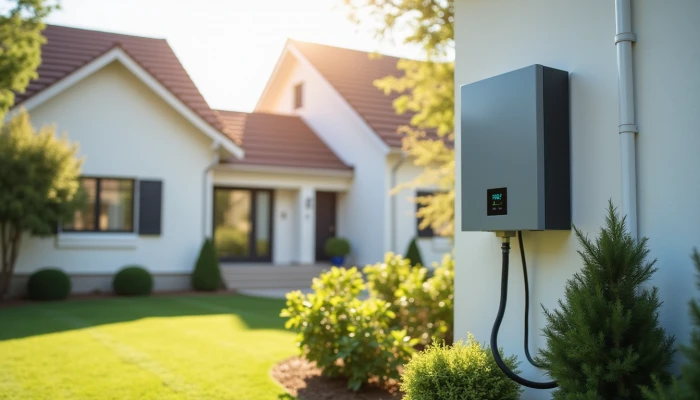
When a Home Battery Makes Sense Without Solar
A home battery does not need solar panels to work. It can charge from the utility grid, sit ready in the background, and provide backup power when the lights go out. For some households, that is enough to make it useful.
But a battery backup for home use without solar is not the same thing as energy independence. It is better understood as stored electricity with a limited runtime and a major dependency: once the battery is empty, you usually need the grid to return before you can recharge it.
That makes the decision less about hype and more about fit. If your goal is better home energy resilience during short outages, quieter backup power, or selective support for essentials like a fridge, internet, lights, or a sump pump, a standalone battery may be practical. If you are trying to ride through long outages with large electric loads, the tradeoffs get harder.
This guide walks through how standalone systems work, where they fall short, what they can cost, and how to think about outage scenarios in a realistic way.
How Standalone Home Batteries Work
A standalone home battery stores electricity from the grid instead of from rooftop solar. Under normal conditions, the battery charges when utility power is available. Some systems can also be programmed to charge during lower-rate periods and discharge later, which can help with time-of-use rate management in some areas.
In backup mode, the battery sends stored power to selected household circuits when the grid goes down. That usually means essential loads rather than every device in the home. What counts as "essential" depends on the system design, battery capacity, and inverter output.
Three basics matter most:
- Battery capacity, usually discussed in kilowatt-hours, affects how much energy is stored.
- Power output, usually discussed in kilowatts, affects what can run at the same time.
- Load selection determines whether the system supports a few critical circuits or a larger share of the home.
This is why a battery can keep a fridge running but still struggle with large electric resistance loads. A battery is an energy reserve, not an unlimited replacement for the grid.
A simple way to think about it is this:
| Question | Why it matters |
|---|---|
| How much energy is stored? | Affects total runtime during an outage. |
| How much power can it deliver at once? | Affects whether large appliances can start and run. |
| Which circuits are backed up? | Affects whether the battery supports essentials or much more. |
For renters or households not ready for a full installed system, a portable power station can serve the same basic role on a smaller scale. The difference is scale and integration. Portable units are usually easier to deploy but support fewer loads and shorter runtimes.
Utility Grid Dependency and Limitations
The biggest practical limit of a battery without solar is simple: it still depends on the utility grid for recharging.
That matters less during a short outage. If the power returns in a few hours, the battery can recharge and be ready for the next event. It matters much more during a multi-day outage. Once the stored energy is used, the system may sit idle until utility service comes back.
This is the core tradeoff that buyers sometimes miss. A standalone battery can improve resilience, but it does not create ongoing power production. It stores electricity ahead of time; it does not make new electricity during an outage.
Whether that is acceptable depends partly on local grid reliability. In areas with occasional short outages, a battery can be a comfortable and low-maintenance solution. In places where storms, wildfire shutoffs, or infrastructure problems can cause long outages, the lack of recharge options becomes a bigger weakness.
A practical screening checklist can help:
- How often does your home lose power?
- How long do outages usually last?
- Are most outages measured in hours or in days?
- Do you need backup for a few essentials or for major household loads?
- Is there another recharge or backup option if the outage continues?
If your honest answers point to frequent long outages, a battery-only setup may not match your needs by itself. That does not mean it is a bad option. It means the system should be evaluated as one part of a backup strategy rather than a complete answer.
Cost Analysis and Economic Considerations
Cost is where many standalone battery decisions become less straightforward.
A battery system can involve the battery itself, inverter hardware, transfer equipment, electrical work, and installation labor. Depending on the setup, a standalone battery may not deliver the same financial logic as a solar-plus-battery system because there is no on-site generation offsetting purchased electricity.
That does not mean there is no value. It means the value often comes from backup power, convenience, noise reduction compared with a generator, and possibly some rate-shifting if your utility has time-of-use pricing.
The economic questions are usually these:
- Are outages common enough that backup power has real value to your household?
- Do local utility rates create meaningful savings opportunities from charging off-peak and using stored power later?
- Would a smaller system covering only critical loads meet your needs at lower cost?
- If you may add solar later, does it make sense to choose equipment that can integrate later?
Some industry guidance suggests standalone batteries can cost more, on a comparable capacity basis, than systems installed alongside solar because the solar project can share some equipment and installation work. But the exact difference depends heavily on system design and local labor costs, so broad savings claims should be treated carefully.
This comparison can help frame the tradeoffs:
| Option | Main value | Main limitation |
|---|---|---|
| Standalone battery | Quiet backup power and possible time-of-use shifting | No recharge during outages unless grid returns or another source is available |
| Solar + battery | Backup plus on-site generation during outages and normal operation | Higher upfront complexity and cost |
| Generator | Longer runtime if fuel is available | Noise, fuel storage, maintenance, and emissions |
For many households, the real comparison is not just battery versus solar. It is also generator vs battery backup. Batteries are quieter and more automatic. Generators usually handle longer outages better if fuel is available. Neither is automatically the better choice in every home.
Outage Scenarios and Real-World Performance
Runtime depends on what you ask the battery to do.
A modest battery may support essentials for somewhere between part of a day and a few days, but only with careful load management. That usually means refrigeration, lighting, device charging, communications equipment, and maybe a few small appliances. It does not usually mean running the whole house as if nothing happened.
Large electric loads change the picture fast. Space heaters, electric water heating, electric dryers, ovens, and central air conditioning can drain stored energy quickly. Even if the battery has enough total energy, inverter limits may prevent some equipment from running well.
A useful way to think about outage planning is by scenario:
| Outage scenario | What a standalone battery often does well | Where it struggles |
|---|---|---|
| Short outage of a few hours | Keeps essentials running with little disruption | Usually not a major issue if loads are controlled |
| Overnight outage | Supports fridge, lights, internet, and charging in many homes | Large heating or cooling loads may be unrealistic |
| One- to three-day outage | Can work if loads are tightly limited and capacity is adequate | No recharge if the grid stays down |
| Longer multi-day outage | May still help at first | Often needs supplemental backup to remain useful |
If your priority is a fridge, medical devices, communications, or a sump pump battery backup strategy, a battery may be a strong fit. If your priority is whole-home comfort through a prolonged winter or summer outage, expectations need to be much more cautious.
For households in outage-prone areas, one practical approach is to define a strict backup tier before shopping:
- List the loads you truly need during an outage.
- Separate them from convenience loads.
- Estimate how many hours or days you want to cover.
- Decide whether you need a second backup source for long events.
That planning step is often more important than the battery brand or marketing claims.
Key Tradeoffs and Decision Factors
A standalone battery is easiest to justify when your needs are narrow and clear. It works best for households that want cleaner, quieter, automatic backup for short outages and are willing to limit what stays on.
Its main advantage is simplicity relative to a full solar-plus-storage project. You can improve backup readiness without committing to rooftop solar right away. That can matter if your roof is unsuitable, you rent, your budget is limited, or you simply want to solve the outage problem first.
Its main disadvantage is that the system does not extend itself during an outage. Once the stored energy is gone, the useful life of the system pauses until outside power returns.
A practical decision framework looks like this:
- Choose standalone battery first if your outages are usually short, you want quiet automatic backup, and you mainly care about essential circuits.
- Consider solar + battery if outages can last multiple days and you want a way to recharge during daylight.
- Consider generator or mixed backup if you need long runtime for larger loads and fuel logistics are acceptable.
The right answer depends on your home, outage pattern, and tolerance for tradeoffs. A battery without solar is not pointless, and it is not a magic solution either. It is a targeted resilience tool.
That is why the best buying question is not "Can a battery run my house?" It is "Which loads do I need to protect, for how long, and what happens if the outage lasts longer than the battery?"
Conclusion
A standalone home battery can absolutely provide useful backup power without solar. For short outages and carefully chosen loads, it can be a practical way to improve comfort, protect essentials, and strengthen home energy resilience.
The limit is recharge. Without solar or another charging source, the battery is a reserve that eventually runs out and waits for the grid to return. That makes outage length, local grid reliability, and load planning central to the decision.
If you are considering one, start with your outage history and your must-run loads. A smaller, well-defined backup plan is often more realistic than aiming for whole-home coverage. And if long outages are part of your risk, compare battery-only, solar-plus-battery, and generator options side by side before deciding.