Backup Power That Actually Works for Apartment Renters
Power outages are frustrating in any home, but renters usually have fewer options than homeowners. You may not be allowed to install anything permanently, store fuel, or run loud equipment on a balcony, in a hallway, or near other units. That can make backup power feel out of reach even when your needs are modest.
The good news is that apartment-friendly backup power does exist. For many renters, the most realistic path to better home energy resilience is a portable battery system that works like a large plug-in appliance rather than a permanent home upgrade.
This guide focuses on what tends to work within rental constraints: understanding landlord rules, choosing a portable power station that matches your actual needs, and building a cost-effective plan without drifting into oversized or unrealistic setups.
Understanding Landlord Policies and Compliance
Before you buy anything, start with your lease. Rental agreements often say more about storage, balconies, electrical devices, noise, and fire safety than they do about backup power specifically. If the lease bans fuel storage, open flames, or engine-powered equipment, that can rule out many generator options even if the word "generator" never appears.
Some renter-focused guidance from manufacturers and compliance articles describes battery backup devices as a gray area when a lease does not mention them directly. That does not mean you should assume approval. It means you should verify what is allowed before an outage forces a rushed decision.
A simple approach is to review your rental situation in this order.
- Read the sections of your lease covering appliances, hazardous materials, balconies, patios, and storage.
- Check building rules for common areas, exits, and anything that could affect charging or storage.
- Ask your landlord or property manager how they want portable battery equipment handled.
- If your building has strict safety oversight, ask whether there are local fire code or authority having jurisdiction requirements that apply.
When you contact a landlord, keep the conversation practical. Explain that you are considering a portable battery backup device for essentials such as phones, internet equipment, lights, or medical-adjacent household needs, not a permanent installation. That framing is often more useful than leading with marketing terms like "solar generator."
It also helps to address the most common concerns upfront.
- No permanent wiring
- No fuel storage
- No indoor combustion
- No blocking exits or hallways
- Charging and use according to the manufacturer instructions
Fire safety matters here. Compliance-oriented guidance commonly emphasizes storage location, ventilation, access, and keeping units away from exits, bedding, and heat sources. In apartment settings, even a portable unit should be treated as a significant electrical device, not as something to tuck into a crowded closet and forget.
If you want a simple rule of thumb, ask yourself whether the setup looks and behaves like a normal portable appliance. A compact battery unit used indoors is often easier to discuss with a landlord than anything involving fuel, extension cords through shared spaces, or balcony equipment that could raise safety questions.
Portable Power Station Options for Renters
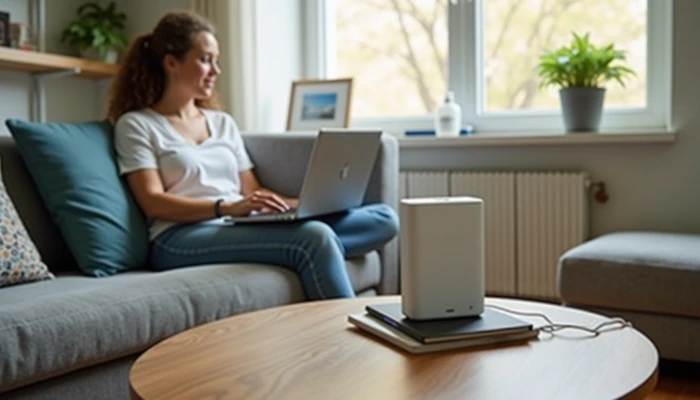
For most apartment households, a portable power station is the most practical form of battery backup without solar. It is quiet, movable, and does not require installation. You charge it from a wall outlet, and during an outage you plug devices directly into the unit.
That makes it very different from a whole-home battery or transfer-switch setup. It is also very different from a gas generator, which raises major indoor safety and building-rule issues in apartment living.
The biggest advantage for renters is that portable battery systems usually behave more like consumer electronics than building equipment. They can often be stored in a closet or utility area, rolled out when needed, and taken with you when you move.
When comparing options, focus less on brand marketing and more on these practical questions.
- Capacity: How much energy can it store for an outage?
- Output: Can it run the device you care about at startup as well as during normal operation?
- Weight and size: Can you safely move and store it in your apartment?
- Noise: Is it quiet enough for overnight use?
- Charging options: Can it recharge from wall power, a car, or optional solar panels?
- Safety features: Does it include clear charging guidance, battery protections, and grounded outlets where appropriate?
A useful way to think about portable power is by outage priority, not by product category.
| Priority level | Typical apartment needs | What to look for |
|---|---|---|
| Basic | Phones, small lights, laptop, modem/router | Small unit, easy storage, simple charging |
| Moderate | CPAP, work equipment, fans, internet, device charging | More usable capacity, reliable AC output, quiet operation |
| Higher-demand essentials | Fridge backup for limited periods, small kitchen loads, multiple devices | Higher output, more capacity, careful load planning |
This is where the generator vs battery backup decision becomes clearer for renters. A fuel-burning generator may offer more raw power, but apartment living usually makes it harder to use legally and safely. Portable battery systems avoid fuel storage and do not create indoor exhaust risks, which is a major reason they fit rental life better.
That does not mean batteries are always better in every situation. It means they are often more compatible with apartment constraints. The tradeoff is runtime and power limits. A portable power station can be a strong fit for essentials, but it is not a substitute for whole-home backup.
If you are considering a unit marketed as a solar generator, remember that many of these are simply battery systems that can also accept solar input. You do not need solar panels to use one. For renters, that distinction matters because the battery itself may be useful even if balcony solar is not allowed or practical.
Cost-Effective Backup Power Strategies
The most affordable backup plan usually starts with reducing your target load. Instead of asking, "What can power my whole apartment?" ask, "What absolutely needs to stay on during a short outage?"
That shift prevents overspending on capacity you may rarely use.
Start by making a short essentials list.
- Phone charging
- Internet modem and router
- A lamp or small task light
- Laptop or tablet
- Medical-supporting household equipment, if relevant
- Refrigerator backup, only if your outage pattern and budget justify it
Then match your budget to your outage pattern.
| Situation | Lower-cost approach | Higher-cost approach |
|---|---|---|
| Short, occasional outages | Small portable unit for communications and lighting | Mid-size unit for more comfort and longer runtime |
| Frequent outages | Mid-size unit with faster recharge options | Larger unit with expansion or multiple charging methods |
| Need more flexibility | AC charging only | AC plus vehicle charging, with optional solar input |
Independent review roundups consistently show a wide spread in portable power station size, performance, and value. That matters because a low-cost unit may be perfectly adequate for phones, lights, and internet, while fridge backup or longer runtimes usually push you into a larger and more expensive category.
A few practical cost-control strategies can help.
- Buy for your real essentials first. A modest unit that covers communication, lighting, and device charging is often more useful than waiting indefinitely for a large system.
- Check charging flexibility. Units that can recharge from AC, a vehicle outlet, or optional solar panels can be more adaptable over time.
- Avoid paying for features you will not use. If you cannot use balcony solar and do not need high-watt appliances, a simpler unit may make more sense.
- Think about portability as value. If you move often, a lighter unit may be worth more to you than extra capacity.
If you are unsure what size to target, use this quick screening framework.
- List the devices you want to power.
- Separate them into must-have and nice-to-have.
- Check whether any device has a high startup surge or special power requirement.
- Decide whether your goal is a few hours of continuity or a longer outage bridge.
- Choose the smallest unit that covers the must-have list with some margin.
For many renters, that process leads to a smaller first purchase than they expected. That is not a bad outcome. It is often the most realistic way to improve home energy resilience without overcommitting money or storage space.
If you later decide you want more runtime, look for a path that still fits rental life: a larger portable power station, a second smaller unit for communications, or a model with multiple charging options. That kind of phased approach is often more budget-friendly than trying to solve every outage scenario at once.
Conclusion
Apartment renters do not need a permanent installation to be better prepared for outages. In many cases, a portable battery system can cover the essentials while staying quieter, simpler, and easier to manage than generator-based options.
The key is to stay realistic. Review your lease, talk with your landlord when needed, follow safety guidance, and size your backup plan around the devices that matter most. A portable setup will not turn an apartment into an off-grid home, but it can make outages much more manageable without creating new problems with building rules, storage, or budget.