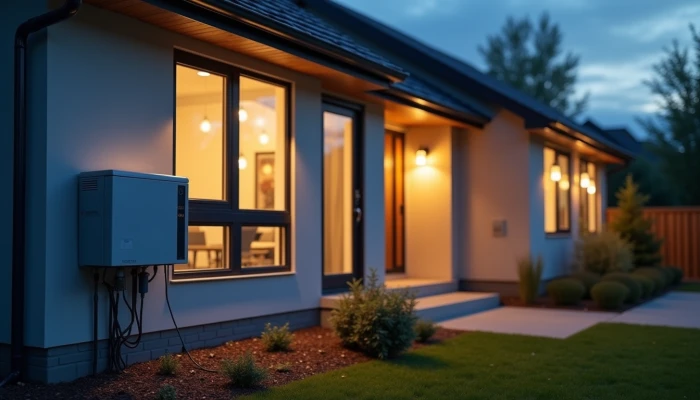
Battery Backup or Generator? How to Choose for Real-World Outages
When the power goes out, the question is not just how to keep the lights on. It is how much backup you actually need, how much work you want to take on, and what tradeoffs make sense for your home.
For many households, the choice comes down to home battery backup versus a generator. Both can keep essential loads running during outages, but they solve the problem in different ways. Battery systems are quieter, automatic, and lower-maintenance. Generators can often support larger loads for longer, especially if fuel is available.
The hard part is that the right answer depends on your outage pattern, budget, space, and tolerance for maintenance. A balanced comparison helps more than a simple "better" or "worse" verdict.
This guide walks through the main decision points: upfront and lifetime costs, maintenance and reliability, and where each option tends to fit best in everyday homes.
Upfront Costs and Lifetime Expenses
The first difference most people notice is purchase price. In general, battery systems often come with a higher upfront cost than portable or standby generators. That can make generators look like the cheaper answer at first glance.
But upfront price is only part of the picture. A useful comparison looks at ownership over many years, including fuel, maintenance, replacement parts, and how often the system is likely to be used.
Generators usually bring recurring costs that batteries largely avoid. Those can include:
- Fuel during outages
- Periodic servicing
- Oil and filter changes
- Inspections or exercise cycles
- Possible repairs related to moving parts
Battery systems usually have fewer ongoing costs because they do not burn fuel and have fewer mechanical components. Some comparison and installer guidance also notes that batteries may provide value outside outages, such as storing grid electricity or pairing with solar, while generators usually sit idle until an outage happens.
That does not automatically make batteries cheaper for every household over a 10-plus-year period. A lot depends on outage frequency, local fuel prices, installation complexity, utility rates, and whether the battery is used only for backup or also for daily load shifting.
A practical way to compare the two is to separate costs into categories.
| Cost factor | Battery backup | Generator |
|---|---|---|
| Upfront equipment and installation | Often higher | Often lower to moderate, depending on type |
| Fuel during outages | None during operation | Ongoing fuel cost |
| Routine maintenance | Usually minimal | Regular maintenance expected |
| Use outside outages | May provide additional household value in some setups | Usually limited to outage use |
| Long outage economics | Limited by stored capacity unless recharged | Can continue if fuel supply holds |
Environmental impact also belongs in the lifetime-cost conversation, even if it does not show up as a line item on an invoice. Batteries avoid on-site combustion during use, which means no exhaust emissions while operating. Generators, by contrast, produce emissions and noise when running. On the other hand, batteries involve manufacturing impacts and eventual recycling or disposal considerations, so they are not impact-free.
For many readers, the most realistic takeaway is this: generators often win on lower entry cost and long-duration runtime, while batteries often look stronger on lower ongoing hassle and potentially lower operating costs over time. The better financial fit depends on how often outages happen and whether you value backup only during emergencies or want the system to do more than one job.
Maintenance and Reliability
Maintenance is one of the clearest differences in the generator vs battery backup decision.
Battery systems are commonly described as low-maintenance because they do not need fuel storage, oil changes, or regular exercise runs. They also have no combustion engine to service. For households that want backup power without adding another annual maintenance task, that simplicity matters.
Generators require more attention. Practical guidance commonly points to at least annual maintenance, and sometimes more depending on use and manufacturer requirements. Fuel also adds another layer of responsibility. You may need to store it safely, rotate it, or make sure a gas or propane supply will still be available during a long outage.
That fuel issue is not just a maintenance detail. It is also a reliability question. During severe weather or widespread outages, fuel access can become less predictable. A generator can keep running as long as fuel is available, but that condition matters more than people sometimes expect.
Battery reliability works differently. A charged battery is ready to respond immediately, and many systems are designed to detect an outage and switch over within seconds. That nearly seamless switchover can be especially useful for:
- Refrigerators and freezers
- Internet equipment
- Medical devices that need continuous power
- Sump pump battery backup planning when short interruptions matter
- Households that want less disruption during brief outages
Generators may have a startup delay, even in automatic standby setups. For many uses that delay is manageable, but it is still a difference from battery systems that are built around fast transfer.
Reliability also depends on matching the system to the load. A battery may be very reliable for essential circuits during short outages, but less suitable if you expect to run heavy loads continuously for days. A generator may be more dependable for that kind of demand, assuming fuel and maintenance are handled properly.
If you want a simple way to think about reliability, use this checklist.
- Choose battery backup if your priority is fast switchover, quiet operation, and low routine maintenance.
- Choose a generator if your priority is longer runtime for larger loads and you are comfortable managing fuel and service.
- Be cautious with either option if your expected loads are not clearly defined.
- Do not assume whole-home backup unless the system is specifically sized for it.
In short, batteries reduce maintenance burden and improve convenience. Generators can offer strong outage performance too, but they ask more from the owner before and during an emergency.
Suitability for Different Household Needs
The best backup option depends less on technology labels and more on your outage pattern, home layout, and power expectations.
Battery backups often make the most sense for shorter outages, essential-load backup, and homes where quiet operation matters. They can also fit better in places with tighter lot sizes, closer neighbors, or stricter noise expectations. For urban and suburban households, those practical details can matter as much as the technical specs.
Generators often make more sense when outages last a long time or when the household wants to support larger loads. If your goal is to keep central air, well pumps, multiple appliances, or other high-demand equipment running for multi-day outages, a generator may be the more realistic tool.
This is where a simple decision framework helps.
| Household need | Battery backup tends to fit better | Generator tends to fit better |
|---|---|---|
| Short outages | Yes | Sometimes |
| Multi-day outages | Limited unless recharged | Often yes, if fuel is available |
| Quiet operation | Yes | No |
| Minimal maintenance | Yes | No |
| Large continuous loads | Limited by system size | Often stronger fit |
| Tight space or noise-sensitive area | Yes | Less ideal |
| Fuel independence during operation | Yes | No |
Solar can also affect the decision, but it should not dominate it. A battery backup without solar can still provide useful outage protection by charging from the grid. With solar, a battery may be able to recharge during longer outages if the system is configured for backup operation. That can improve resilience, but it is not automatic in every setup.
Generators are more independent from solar and can be a straightforward answer where renewable integration is not a priority. They are often chosen because they can deliver power for as long as fuel can be supplied.
A practical selection process looks like this.
- List the loads you actually need during an outage.
- Estimate how long outages usually last in your area.
- Decide whether you want whole-home backup or just essential circuits.
- Consider whether noise, fuel storage, and maintenance are acceptable.
- Check whether you want the system to do anything outside outages.
For example, a household in a dense neighborhood with occasional short outages may prefer a battery because it is quiet, automatic, and easier to live with. A rural home with a well pump and frequent multi-day outages may lean toward a generator because runtime and higher load capacity matter more.
Neither option is universally better. The better fit comes from matching the backup method to the kind of outage you are actually preparing for, not the most extreme scenario you can imagine.
Conclusion
Choosing between a battery system and a generator is really about choosing which tradeoffs you want to live with before the next outage arrives.
Battery backup tends to appeal to households that want quiet operation, instant switchover, and low maintenance. Generators tend to appeal to households that need longer runtime or support for larger loads and are willing to manage fuel and service.
The most useful decision factors are usually these:
- How long your outages typically last
- Which appliances or circuits you truly need to run
- Your budget for both installation and long-term ownership
- Your tolerance for maintenance, noise, and fuel logistics
- Whether environmental impact during operation matters in your decision
There is no one-size-fits-all answer. A practical choice comes from matching the system to your home, your outage history, and your priorities rather than assuming one technology is always the smarter buy.