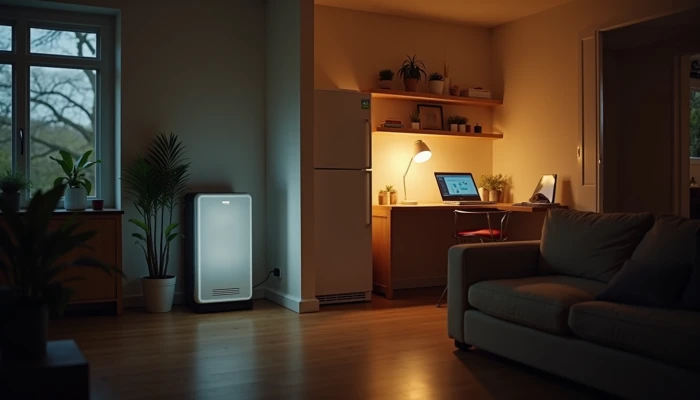
When a Home Battery Makes Sense Even Without Solar
Power outages push a lot of households toward the same question: is a home battery still worth considering if you do not have solar panels?
The short answer is yes, sometimes. A standalone battery can support home energy resilience by keeping a few important circuits running during a blackout, reducing noise and fuel handling compared with a generator, and giving you cleaner indoor-safe backup power. But it is not automatically the right choice for every home.
The main tradeoffs are straightforward. Batteries usually cost more upfront than small generators, they have limited runtime unless they can recharge, and installation can range from simple plug-in setups to more involved electrical work. The right choice depends on what you need to power, how long outages usually last, and how much convenience matters in your budget.
This guide walks through how non-solar battery backup works, what it typically costs, what kind of runtime you can realistically expect, and what to check before installation.
Understanding Standalone Home Battery Systems
A standalone home battery system stores electricity from the grid and then supplies that stored power when the utility goes down. In other words, solar is optional. Many systems are designed to charge from regular household power, and some can also recharge from a compatible generator.
That makes them different from the common assumption that batteries only make sense as part of a solar setup. For outage preparedness, the battery's main job is simpler: hold energy in reserve and switch it to selected loads when needed.
In practice, standalone systems usually fall into two broad categories.
- Portable power stations that plug into devices directly or through a transfer setup for a few essentials
- Installed home battery systems connected to selected circuits or, in larger setups, much more of the home
Capacity matters more than marketing language. A battery with a small energy reserve may handle lighting, phone charging, internet equipment, and part-time refrigerator use. A larger system may support more circuits and reduce how carefully you need to ration power.
A simple way to think about it is this.
| System type | Typical role during outages | Main limitation |
|---|---|---|
| Portable power station | Small essential loads, temporary backup, apartment or renter-friendly use | Lower capacity and fewer high-power loads |
| Installed essential-load battery | Refrigerator, lights, internet, outlets, maybe sump pump depending on load | Usually not enough for whole-home comfort loads |
| Larger installed battery | More circuits, longer runtime, smoother backup experience | Higher upfront cost and more installation complexity |
Compared with fuel-based backup, batteries are quieter, need less routine maintenance, and avoid exhaust concerns. But unlike a generator, a battery cannot keep running indefinitely unless it has a way to recharge. Without solar, that usually means waiting for grid power to return or pairing the battery with a generator for longer outages.
That is why standalone battery backup works best when your goal is not "run everything," but "keep the most important things working safely and simply."
Cost Considerations for Non-Solar Battery Systems
Cost is where many households hesitate, and reasonably so. Available pricing guidance for non-solar battery backup suggests a wide range depending on capacity and installation.
For a basic essential-load setup, published ranges commonly start around $3,000 to $5,000. Larger installed systems intended for broader home backup often fall around $8,000 to $15,000, with some higher-capacity options going beyond that.
Those ranges usually reflect more than just the battery itself. Final cost can be shaped by several factors.
- Battery capacity in kWh
- Power output in kW, which affects what can run at once
- Whether the system is portable or permanently installed
- Transfer equipment, subpanels, or panel upgrades
- Labor, permitting, and local electrical requirements
- Whether generator charging compatibility is included
The comparison with generators is not one-directional. A generator often wins on upfront price, especially for households that only want occasional emergency backup. A battery often wins on convenience, noise, maintenance, and indoor usability.
This side-by-side view helps frame the tradeoff.
| Factor | Standalone battery | Generator |
|---|---|---|
| Upfront cost | Usually higher | Usually lower |
| Fuel during outage | None while stored energy lasts | Ongoing fuel needed |
| Noise | Low | Moderate to high |
| Maintenance | Typically minimal | Regular testing and engine-related upkeep |
| Indoor safety | No exhaust during use | Exhaust and carbon monoxide concerns |
| Long outage performance | Limited unless recharged | Can continue with fuel supply |
A practical rule is to compare not just purchase price, but your outage pattern.
- If outages are short and frequent, battery convenience may matter more.
- If outages are rare but can last several days, generator backup may pencil out better.
- If outages vary, a battery-plus-generator approach can be worth considering.
What you should avoid is assuming a battery will pay for itself through savings alone. For many buyers, the main value is resilience, convenience, and reduced disruption during outages, not guaranteed financial return.
Runtime and Capacity: What to Expect
Runtime is where expectations often drift away from reality. Battery size is only half the story. The other half is what you are asking it to do.
A commonly cited example is that a 5 kWh battery may support essential loads such as a refrigerator, lights, and small electronics for around 10 hours under moderate use. That can be useful for overnight outages or shorter utility interruptions, but it does not mean every 5 kWh system will produce the same result in every home.
Runtime depends on three things.
- Total battery capacity in kWh
- Instant power demand from devices running at the same time
- Actual usage patterns, especially cycling appliances like refrigerators or sump pumps
Here is a practical way to estimate your needs.
- List the loads you truly need during an outage
- Note both running wattage and startup surge where relevant
- Estimate how many hours each load will operate
- Add a buffer rather than sizing to the exact minimum
For many homes, the first priority loads look something like this.
- Refrigerator or freezer
- A few lights
- Internet modem and router
- Phone charging
- Medical devices if applicable
- Sump pump if flooding risk is a concern
- A few outlets for small electronics
Larger batteries in the 10 to 20 kWh range can extend runtime and support more circuits, but they still require prioritization if you have high-demand equipment. Electric resistance heat, central air conditioning, ovens, dryers, and some well pumps can drain stored energy quickly.
A useful mindset is to separate essential loads from comfort loads.
| Load type | Usually battery-friendly? | Why |
|---|---|---|
| Lights, internet, phone charging | Yes | Low energy use |
| Refrigerator | Often yes | Important load with moderate cycling demand |
| Sump pump | Sometimes | Can work well, but surge and duty cycle matter |
| Microwave or coffee maker | Sometimes briefly | Short bursts are possible if output allows |
| Electric water heater | Often no for small systems | High draw |
| Central AC or electric heat strips | Often no unless system is large | Very high energy demand |
If your goal is backup power for outages, sizing around essentials usually gives the clearest value. If your goal is whole-home continuity with minimal behavior changes, costs rise quickly and runtime still may not match expectations during multi-day outages.
That is also where generator vs battery backup becomes less of a debate and more of a planning question. Batteries are excellent for short interruptions and daily convenience. Generators remain stronger for long-duration backup unless the battery can recharge reliably.
Installation and Setup Without Solar
Installation is not one-size-fits-all. A non-solar battery setup can be simple, but once you want automatic backup to home circuits, the electrical details matter.
For installed systems, compatibility with your existing panel is a major checkpoint. Some homes may need a critical-load subpanel, transfer equipment, or other electrical updates so the battery can safely isolate selected circuits during an outage.
Professional installation is usually the right path for grid-connected systems. It helps address code compliance, utility interconnection rules where applicable, breaker compatibility, and safe operation during outages.
Before moving forward, it helps to confirm the following.
- Which circuits you want backed up
- Whether the battery can handle startup surges from those loads
- Whether your main panel has space or needs modification
- Whether the system supports manual or automatic switchover
- Whether generator charging is possible for longer outages
- Where the battery can be installed based on manufacturer spacing and environmental requirements
Space and placement also vary. Some systems are wall-mounted. Others are floor-standing. Portable options need less permanent space but may require extension planning or a transfer inlet if you want cleaner home integration.
Use this quick decision checklist before requesting quotes.
- Outage pattern: Are your outages usually a few hours, overnight, or multiple days?
- Load priority: Do you need only essentials, or do you want near-whole-home backup?
- Recharge plan: Will you rely only on the grid, or do you want generator charging too?
- Housing constraints: Do you own the home, rent, or have limited installation space?
- Noise tolerance: Is quiet operation a major priority?
- Fuel tolerance: Are you comfortable storing and managing fuel during emergencies?
For renters or households not ready for electrical work, a portable power station can be a realistic first step. For homeowners who want automatic backup to selected circuits, an installed battery system is more seamless but requires more planning.
The most practical setup is the one that matches your outage risks and your actual must-have loads, not the largest system you can price out.
Conclusion
A standalone battery can be a sensible resilience upgrade even without solar, but it works best when you are clear about the job you want it to do.
If you mainly want quiet, low-maintenance backup for short outages and essential circuits, a battery may be a strong fit. If you need to power large loads for days at a time, a generator may still be the more practical core solution. For some homes, the middle ground is a battery for everyday outage convenience and a generator for extended events.
The key is to size around real priorities: what must stay on, for how long, and at what budget. That approach leads to better decisions than assuming any battery system will automatically cover a whole house or replace every other backup option.