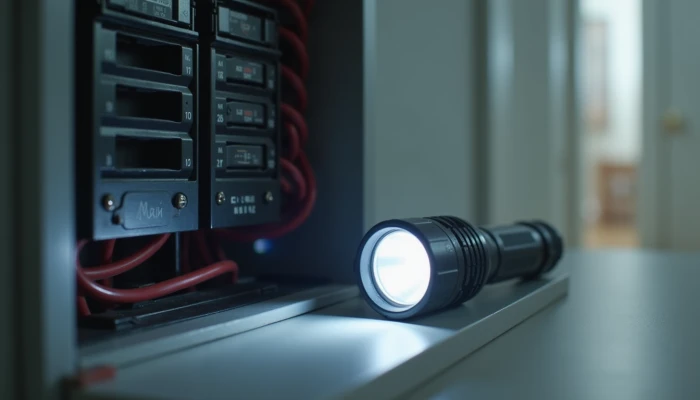
Will Your Electrical Panel Support a Heat Pump?
A heat pump can be a practical step in home electrification, but the equipment itself is only part of the project. Your electrical panel has to support the new load safely and in a way that meets code.
That is where many homeowners get stuck. You may know you want to replace or supplement existing heating and cooling, but not whether your current service can handle it without tripping breakers, crowding the panel, or triggering a costly upgrade.
This guide walks through a simple readiness checklist. It will not replace a professional load calculation, but it can help you understand what to look for before you get quotes, compare options, or talk with an installer.
Use this as a first-pass screen:
- Check your panel amperage.
- Review how much electrical load your home already carries.
- Identify signs that a licensed electrician should evaluate the project before you move forward.
That preparation can help you avoid surprises and ask better questions during the installation process.
Checking Your Electrical Panel's Amperage Capacity
Start with the simplest question: how much electrical service does your home have now?
In many homes, the main panel rating is 100 amps, 150 amps, or 200 amps. Modern homes often have 200-amp service, while older homes may have less. That number matters because it sets the upper limit for how much electricity your home can draw at one time.
A typical residential heat pump often needs a dedicated 208-240V circuit, and general guidance commonly places that circuit in roughly the 20-40 amp range depending on equipment size and manufacturer specifications. The exact requirement is not something to guess. Installers and electricians look at the unit nameplate and the manufacturer's minimum circuit ampacity and overcurrent protection requirements.
You can usually find your panel's service rating in one of these places:
- On the main breaker handle or label
- On the panel door label
- Near the main service disconnect
- In electrical permit records or prior upgrade paperwork
If the labeling is unclear, do not assume. A licensed electrician can confirm the actual service size and whether the panel is in good enough condition for added loads.
Panel readiness is not only about the amperage number. Also check these practical limits:
- Available breaker space: A heat pump usually needs dedicated breaker positions.
- Panel condition: Corrosion, overheating marks, or outdated equipment can change the conversation.
- Service age: Older panels may be functional but less flexible for new electrification projects.
- Subpanel setup: Some homes have room in a subpanel, but that does not automatically mean the main service has enough capacity.
This quick reference can help frame what you are seeing:
| Panel situation | What it may mean for a heat pump project |
|---|---|
| 200A panel with open spaces | Often a simpler starting point, but still needs load review |
| 100A or 150A panel with several large electric appliances | Greater chance that load calculations will be tight |
| Full panel with no open breaker spaces | May need reconfiguration, a subpanel, or a service upgrade |
| Old or damaged panel | Safety and replacement issues may need attention before installation |
A 200-amp panel does not guarantee that a heat pump will fit easily, and a 100-amp panel does not automatically rule one out. The panel rating is just the first screen. The next step is understanding what your home is already asking that panel to do.
Calculating Existing Appliance Electrical Loads
Once you know your panel size, the next question is whether your home has enough load headroom for a heat pump.
This is where many people mix up two different ideas:
- Breaker sizes and appliance labels tell you what individual equipment may require.
- A load calculation estimates how much demand the whole home can place on the electrical service.
For a real answer, electricians use code-based methods such as NEC Article 220. That process can be more nuanced than simply adding every breaker together, because code methods apply demand factors and account for how homes actually use loads.
Still, a homeowner can do a useful pre-check by listing major existing electric loads. Focus on equipment that draws substantial power or may run at the same time as a heat pump.
Start with this checklist:
- Central air conditioner or existing heat pump
- Electric furnace or electric resistance backup heat
- Electric water heater or heat pump water heater
- Electric range or oven
- Clothes dryer
- EV charger
- Hot tub, sauna, or pool equipment
- Well pump or sump pump
- Workshop tools or other 240V equipment
- Battery backup for home systems that include dedicated charging circuits
Then note whether any of those loads are likely to overlap. For example, a winter peak could include space heating, water heating, cooking, laundry, and an EV charger in the same evening.
A practical pre-screen looks like this:
- Identify all major 240V appliances and their nameplate ratings.
- Note any large 120V loads that run frequently.
- Check whether the panel is already crowded with tandem breakers, double-tapped circuits, or other signs of limited space.
- Ask the installer whether the proposed heat pump includes electric strip backup heat, because that can materially change electrical demand.
- Request a formal load calculation if the answer still looks uncertain.
One common mistake is assuming the outdoor unit tells the whole story. In some systems, especially ducted systems with auxiliary resistance heat, the backup heat can be a major part of the electrical requirement. Another mistake is ignoring future electrification plans. If you may later add an EV charger, induction range, or heat pump water heater, it is worth discussing that now rather than sizing the panel only for today's project.
Use this simple worksheet to organize what you find before talking with a contractor:
| Item | Voltage | Nameplate amps or watts | Runs often? | Could overlap with heat pump? |
|---|---|---|---|---|
| Space heating / cooling equipment | 120V or 240V | |||
| Water heater | 120V or 240V | |||
| Range / oven | 240V | |||
| Dryer | 240V | |||
| EV charger | 240V | |||
| Sump or well pump | 120V or 240V | |||
| Other large loads |
This kind of worksheet will not replace a code calculation, but it makes the electrician's job easier and helps you spot obvious conflicts early.
If you are also planning resilience upgrades, such as a portable power station or solar generator for outages, keep those conversations separate from the heat pump load question unless the system will be permanently integrated into the home's electrical system. Portable backup options may help with short-term outage needs, but they do not solve panel capacity limits for a new HVAC installation.
When to Consult a Licensed Electrician
A licensed electrician is not just the person who upgrades a panel if needed. They are often the person who helps you avoid an unnecessary upgrade in the first place.
You should strongly consider a professional evaluation if any of these apply:
- Your panel is 100 amps and you already have several major electric appliances.
- The panel has no open breaker spaces.
- You are not sure whether the service rating on the panel is accurate.
- The home has older wiring, signs of overheating, or a panel brand with a poor reputation.
- The heat pump proposal includes electric auxiliary heat.
- You plan to add other electrification loads soon, such as an EV charger or heat pump water heater.
An electrician can help answer a few key questions:
- Does the existing service have enough capacity under a formal load calculation?
- Is the issue service size, breaker space, wiring, or all three?
- Could a subpanel, load management approach, or circuit reconfiguration solve the problem?
- If an upgrade is needed, what scope is actually required?
That last point matters because "panel upgrade" can mean different things. In one home, it may mean reorganizing circuits or adding a subpanel. In another, it may mean replacing the main panel and upgrading service equipment. Cost ranges vary widely by local labor, utility requirements, permit fees, and whether related work is triggered.
If you get to this stage, ask for a written explanation of the constraint. A useful quote or assessment should clarify whether the limiting factor is:
- Main service amperage
- Lack of breaker spaces
- Conductor or wiring limitations
- Equipment condition or code issues
- Added demand from backup heat or other planned appliances
You can also ask whether any incentives or tax credits may apply to qualifying electrical work connected to home electrification projects. Eligibility rules change, and details depend on the specific project, so treat that as a follow-up question rather than an assumption.
A good electrician or heat pump installer should be comfortable walking you through the tradeoffs. In some homes, the answer will be straightforward. In others, the best path may involve sequencing upgrades over time rather than doing everything at once.
The goal is not to force every home toward a 200-amp upgrade by default. It is to make sure the final installation is safe, code-compliant, and matched to how your household actually uses electricity.
Conclusion
If you are considering a heat pump, checking panel readiness early can save time and reduce surprises later. Start with the basics: confirm your panel amperage, review your major existing loads, and note whether the panel has both physical space and electrical headroom for a new dedicated circuit.
That simple checklist will not give every answer, but it will tell you whether the project looks straightforward or whether you need a closer review.
For many households, the most useful next step is a licensed electrician who can perform a proper load calculation and explain your options clearly. That keeps your home electrification plans grounded in your actual wiring, service capacity, and future upgrade goals rather than guesswork.